From October 23 to 25, the Second International Conference on Energy and Transportation Integration (C-TEIT2026) was held in Wuhan. The conference, themed “Integration Creates the Future - Transportation-Energy Integration in the Context of Green, Intelligent and Resilient Transformation,” focused on frontier technologies, innovative models and practical pathways for the deep integration of transportation and energy. It served as a platform for high-level interdisciplinary, cross-industry and cross-sector academic exchange and cooperation, promoting technological innovation and industrial synergy in the transportation and energy fields. More than 420 experts, scholars and industry representatives from the United Kingdom, Germany, Canada, Denmark, Singapore, China and other countries and regions gathered in Wuhan to discuss new trends, new technologies and new opportunities in the integrated development of energy and transportation.
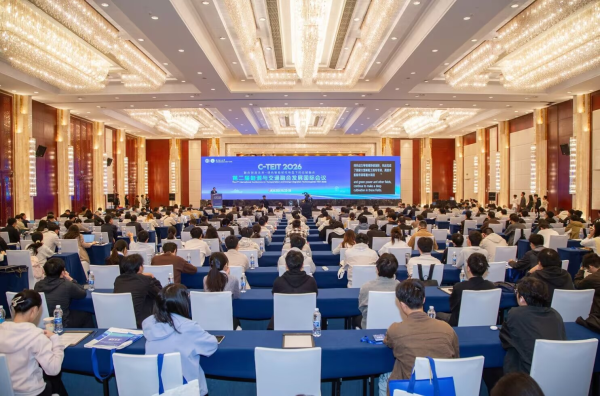
On the morning of October 24, the opening ceremony of the conference was held at the Hongshan Hotel in Wuhan. Meng Fangbing, Secretary of the Party Committee of Wuhan University of Technology (WUT); Bi Tianshu, representative of the National Energy and Transportation Integration Innovation and Development Consortium and President of North China Electric Power University; and Yan Xinping, Conference Chair, Academician of the Chinese Academy of Engineering, President of the China Institute of Navigation and Professor at WUT, delivered speeches respectively. Sun Jixiang, Vice Chairman of the Hubei Association for Science and Technology, and Zhang Di, Vice President of WUT, attended the meeting.
Meng Fangbing stated that the integration of transportation and energy is a necessity of the times and a requirement for development. WUT has been always committed to the “innovation and integration” development strategy, giving full play to its disciplinary and research strengths in fields such as transportation engineering and energy and green power, and actively advancing green, intelligent and safe technological innovation. He hoped that this conference would serve as an opportunity to deepen exchanges and cooperation with domestic and international universities, research institutes and industry enterprises, so as to make greater contributions to tackling key technological challenges, demonstrating applications, formulating standards and cultivating talent in transportation-energy integration.
Bi Tianshu stated that since its establishment, the Consortium has given full play to its platform advantages of interdisciplinary and cross-industry collaborative innovation, and has continued to promote the green, clean and self-consistent transformation of transportation energy. In the future, the consortium will further integrate innovation resources, deepen open cooperation, promote energy self-consistency of transportation infrastructure and demonstration applications of equipment energy and power, and provide solid support for the integrated development of energy and transportation.
Yan Xinping pointed out that green and low-carbon transformation has become a global consensus, and that the energy revolution and transportation transformation are deeply converging. The successive introduction of relevant national policies has provided important strategic opportunities for the integrated development of transportation and energy. He emphasized that the deep integration of transportation and energy requires not only the intellectual guidance of academia but also the practical support of industry, and even more importantly, international open cooperation. He expressed the expectation that this conference would serve as a platform to pool global innovative wisdom and jointly promote technological innovation and industrial development in transportation-energy integration.
After the opening ceremony, the conference held a roundtable dialogue themed “Energy-Transportation Integration and AI,” focusing on the deep integration of artificial intelligence technology with energy and transportation systems, and discussing topics such as the coordinated development of energy and transportation, intelligent transformation and technological innovation, so as to provide ideas for exploring new models and new pathways for transportation-energy integration. The dialogue was moderated by Professor Zhao Fuquan, Lifetime Honorary President of the World Society of Automotive Engineers and Dean of the Institute of Automotive Industry and Technology Strategy at Tsinghua University. Participants in the exchange included Wang Jun, Chief Scientist of CRRC; Feng Jianghua, Academician of the Chinese Academy of Engineering and Chief Scientist of CRRC; Bi Tianshu, President of North China Electric Power University; Zhang Junzhi, Professor at Tsinghua University; Jia Limin, Professor at Beijing Jiaotong University (BJTU) and Executive Dean of the National Energy and Transportation Integration Development Research Institute at North China Electric Power University; and Hongyuan ZHAO, Director of China Operations at DT Matrix, Singapore, among other guests.
The keynote report brought together renowned experts and scholars from home and abroad to conduct academic exchanges on frontier technologies in fields such as waterway, highway and rail transportation, new energy vehicles and new energy systems. The conference set up five parallel forums and three thematic forums to further deepen academic discussion and technical exchange in the field of transportation-energy integration.
This conference was hosted by thet Consortium, organized by WUT and the Intelligent New Energy Ship Technology Innovation Industry Alliance, co-organized by multiple universities, and supported by multiple societies and key laboratories. The next conference will be hosted by Lanzhou University. The Consortium was initiated by 11 universities, including North China Electric Power University, WUT and BJTU, currently having 27 member organizations. It aims to set up an academic exchange and collaborative innovation platform for transportation-energy integration, deepen industry-university-research cooperation, advance key technological research and achievement transformation, and build China’s strength in transportation, the “dual carbon” goals and high-quality economic and social development.
Written by: Cui Weiyi, Yang Wei
Edited by: Yang Jintao, Mei Mengqi, Yu Bingjie
Source: School of Transportation and Logistics Engineering
|
|